TY Jewelry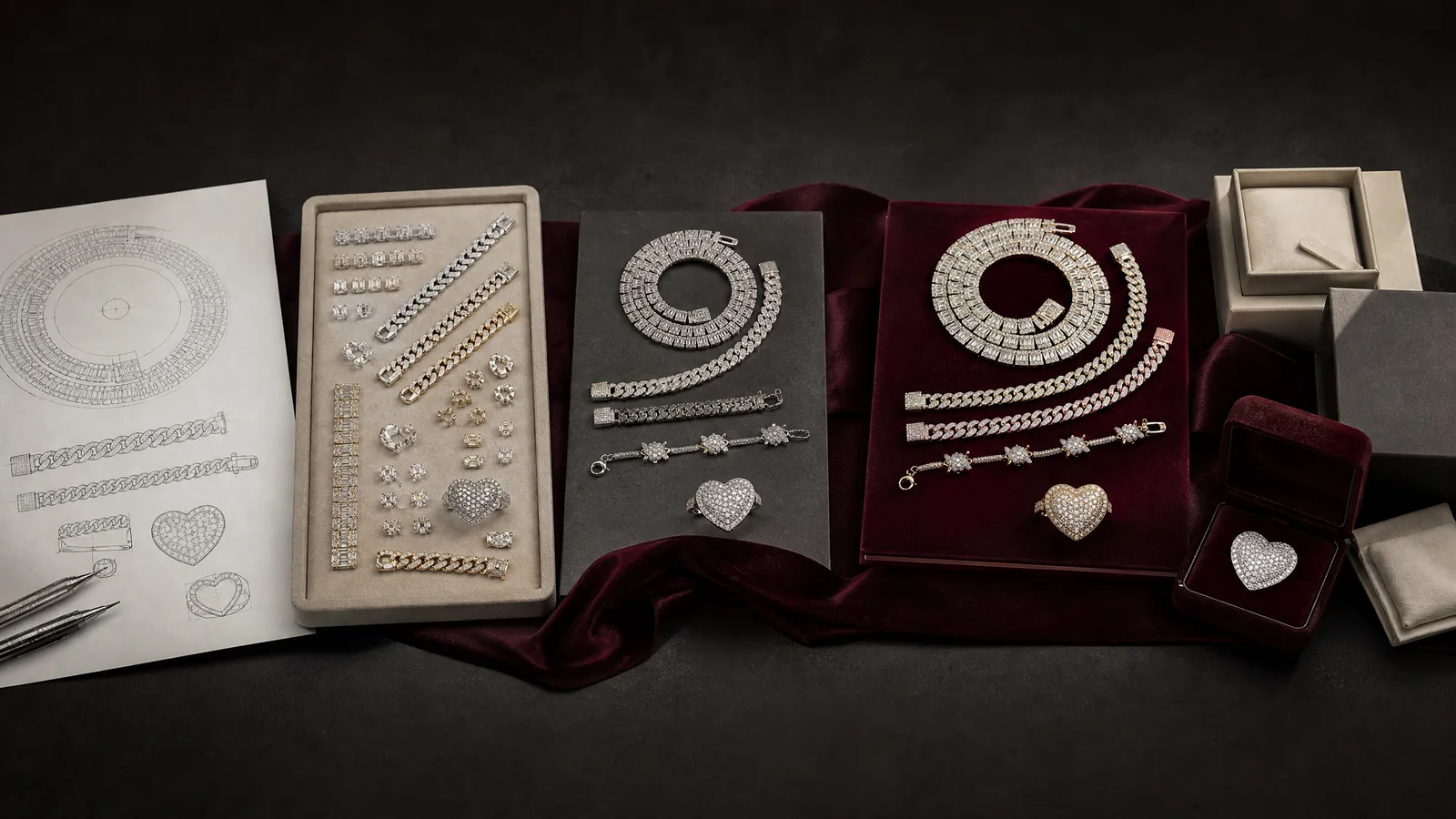
Sample approval should identify the product that may enter production
Approving a jewelry sample means confirming an identifiable product and specification for the next production stage. It should establish what was examined, which version passed, what remains open and who authorized the decision. “Looks good” in a message is not enough when the factory, designer and buyer could be referring to different samples.
For an OEM or private-label project, maintain a sample record for every relevant style and configuration. Link it to the drawing, component list, finish reference, logo file and packaging specification. The approved standard is the combination of these records and the agreed physical reference, not a photograph alone. This guide explains a practical buyer workflow; the actual tests, tolerances and approval conditions must be agreed for your product.
Identify what kind of sample you are reviewing
Catalogue reference: useful for discussing style, material feel or a process. It may have a different size, finish, component or logo from the proposed order. Record the attributes you intend to copy and those you intend to change.
Development sample: used to resolve feasibility, proportions, assembly or appearance. It may use temporary components or a different process from bulk production. Ask which features are representative and which will change. Do not approve a substituted clasp unintentionally because the pendant looks correct.
Pre-production or approval sample: intended to define the production standard after open design questions are resolved. Confirm that its manufacturing route and configuration are representative of the order, or document and close any exception before releasing the affected work.
Keep rejected and superseded samples identifiable. Removing an old sample from the display tray does not update the drawing on a production workstation. Use a clear status and version history across physical samples, files and communications.
Review the whole product, including interfaces
Start with identity: sample number, SKU, quantity variant, drawing revision and date received. Then inspect these groups separately:
- Dimensions and fit: measurement points, ring-size system, finished chain length, extender range, pendant opening and component clearances.
- Materials and finish: declared substrate and component materials, finish reference, texture, appearance under agreed viewing conditions and any supporting documents.
- Assembly and operation: clasp engagement, jump-ring closure, pendant movement, edges and contact points. Function must be considered in the final assembled configuration.
- Branding: approved logo file, orientation, dimensions, location and legibility at actual size.
- Packaging and identification: product retention, contact with finished surfaces, SKU label, variant identification and packing arrangement.
Jewelry inspection practice covers workmanship, assembly, dimensions, marking and packaging as distinct checks. An attractive finish cannot substitute for those other checks. QIMA’s inspection overview provides context; it does not mean TY Jewelry uses that provider or that every listed test applies to your order.
For dimensions, refer to the measurement and components guide. For branding, use the logo preparation guide. Neither a label saying “316L” nor a visual review proves a material or performance claim; request the appropriate evidence separately.
Agree what evidence can support each decision
Use photographs to document visible features and comparison points. Include an overall view, defined close-ups and a scale where needed. State the sample identifier in the record rather than relying on a renamed image file. Screens, lighting and camera processing can change perceived colour. Where appearance is critical, agree how physical references and viewing conditions will control the decision.
Measurements should include the method and instrument, not only a number. For example, a bracelet’s open length is different from its internal circumference when closed. A repeat measurement by another person should follow the same instruction. If the method itself is disputed, resolve that before deciding whether the sample is inside a tolerance.
Separate visual approval from laboratory evidence. Approval of appearance does not establish chemical composition, release behaviour or long-term durability. Record required tests, the sample or configuration they cover, and whether results are still pending. Follow the test-report review guide for that assessment.
Use a decision with an explicit scope
Approved: the identified revision meets the agreed requirements for the stated release. Record the date and authorized buyer contact. Confirm that the factory acknowledges the same version.
Approved with a limited exception: use only when the exception and its consequence are understood. State exactly what work may proceed, what may not proceed, who closes the issue and which evidence is required. Avoid a blanket “approved with changes” that leaves production to interpret an unapproved design.
Revise and resubmit: state the discrepancy, required outcome and affected documents. A new sample should reference the previous issue rather than restarting the discussion from an unlabeled photo.
Hold: use when a decision cannot yet be made, for example because a material document or fit review is missing. A hold is different from a rejection and is not production authorization.
Worked example: a pendant passes, its chain does not
Consider an illustrative necklace project. The buyer accepts the pendant’s shape and logo but finds that the proposed chain assembly does not pass through the pendant opening. The response should not be “necklace approved; change chain.” That leaves the factory to choose a new chain, connector or pendant opening, each of which could affect appearance, cost and performance.
Record the approved pendant features and the failed interface. Request a revised assembly with a defined chain-end envelope and pendant-opening requirement. Review the assembled sample, update the component list and confirm any price or timing change. Until that review is complete, the necklace configuration remains on hold even if an individual component has been accepted.
This separation is useful for ring sizes, different finishes and packaging variants too. One successful sample does not automatically validate every size or configuration. Agree representative coverage and how untested variants will be addressed.
A reusable sample approval record
Project / SKU / sample ID / received date:
Sample purpose and manufacturing route:
Drawing / component list / finish / logo / packaging revisions:
Feature checked / method / target / observation:
Photograph or measurement record reference:
Required supporting test or material evidence:
Deviation and affected configurations:
Decision: approve / limited exception / revise / hold
Work authorized and work still prohibited:
Corrective action / owner / due date:
Buyer approval / factory acknowledgment / date:
Retained sample location / superseded version status:
Keep a retained reference accessible to the parties who will compare production. Agree storage, handling and replacement if the sample degrades or is damaged. If both parties retain samples, identify them as a matched set and document any differences. Do not silently substitute a later production item as the master reference.
Connect approval to production, inspection and reorders
The release package should contain the approved sample record, current drawing, component list, finish reference, logo artwork, packing instruction and unresolved-item register. Changes after release need a new decision, including their effects on price and schedule. A message from a different team member should not silently overwrite the recorded approval.
Sample approval defines the target; pre-shipment inspection evaluates the delivery lot against it. Reorder control determines whether a later order can use the same target and process or needs another review. These are separate decisions.
For a TY Jewelry B2B sampling discussion, send the product references and the specific features you need to validate. Review the sampling service and prepare the record above before requesting a project quotation. The goal is an approval that another person can understand without reconstructing a long message history.